Wisconsin Society of American Foresters.  Alternate text links are at the bottom of the page.


SW Chapter - Last Meeting
 
Badger Army Ammunition Plant tour provides environmental lesson to DNR, SAF members
 

By Paul Pingrey

The Southwest Wisconsin Chapter of the Society of American Foresters (SAF) hosted an intriguing field tour on August 27, 2008 at the Badger Army Ammunition Plant (BAAP) in Sauk County. The tour attracted 20 DNR staffers and SAF members and guests to the training opportunity.

Mike Mossman (center) shares information about efforts to preserve the history of the Badger Army Ammunition Plant, including the concrete blast wall of a rocket propellant extruder behind tour participants. Hundreds of similar structures will still be at the site once planned demolition work is completed.

The plant, originally known as the Badger Ordnance Works, was established in 1942, after local farm families were evicted. The 7,354-acre plant produced propellant (gun powder) for rockets and mortars and rifle ammunition used in World War II, was reactivated during the Korean War, and continued through the Vietnam War. In 1997, the Army declared Badger to be excess to its needs. Production and storage was distributed among an estimated 1,500 buildings on the site to minimize the hazard of catastrophic explosions. The plant has since been decommissioned and is being returned to non-military use. About 3,400 acres, mainly on the northeast side of the site, will be deeded to the DNR. A quarter of the area - productive farmland - has already been transferred to the U.S. Department of Agriculture Dairy Forage Research Station. Most of the remainder of the land along Wisconsin Highway 12 will go to the Ho-Chunk Nation for a bison ranch.

The view from the Badger overlook shows how most of the area is dotted with concrete reminders of the demolished gun power production facilities. This portion of the land will be going to the Ho Chunk Tribe.

The Army's demolition contractors are removing buildings that pose an explosive threat as a result of their impregnation with nitrocellulose propellant chemicals. Concrete portions of buildings that are not considered dangerous are being left for the next landowners (including the DNR) to deal with. New owners will also inherit nearly 1,000 dilapidated buildings full of asbestos and toxic paints that the Army has no plans to remove, along with hundreds of underground munitions bunkers, an active landfill full of toxic chemicals, water reservoirs, pump stations, steam pipe scaffolds, and other hazards.

The fate of most of the wood structures used in power production at the Badger Army Ammunition Plant is ground mulch. Wood from those buildings is too dangerous to be reused due to chemical saturation. Other wood from non-hazardous structures might be used at the Forestry Learning Center planned for Milwaukee.

A bluff that borders Devil's Lake State Park offered an eerie view of the site. Some of the SAF participants joked the area could be called "Ruins State Park" because the vista looked like a Mayan "lost city." The unfortunate reality is the old asbestos-sided buildings, the 6-foot-thick concrete blast walls, the stairwell towers, the 20-foot-deep water reservoirs (with walls so steep that reptiles and other animals are unable to climb out) and the myriad of structures at BAAP won't translate into a safe family-fun location. Vegetative management will also be tricky, as open expanses between the old structures are filled with thick tangles of invasive shrubs. DNR foresters noted some areas seem to be impenetrable with thorns, a real-life version of Sleeping Beauty's fabled woods. Not even fire is a practical option to remove that kind of growth once grass has been crowded out with autumn olive, multiflora rose, buckthorn, and other brush that doesn't carry flames.

Four DNR speakers talked about their work with the property. Craig Karr, a retired DNR administrator now working on BAAP transition, shared information about the history of the property and talked about attempts to recycle wood from the structures. Mike Mossman, DNR research scientist and bird specialist, discussed the value of the landscape for grassland birds. Aaron Young, Baraboo forestry team leader, described problems dealing with the rampant invasive plants and how the grassland area could eventually be added to Devil's Lake State Park as a complement to the Baraboo Bluffs' extensive woodland. Eileen Pierce, SCR air and waste leader, talked about the problems involved in cleaning up contaminated soil and water: "We haven't found a problem yet at Badger that a lot of money can't solve." Sadly, money is in very scarce supply.

While challenges are substantial, the potential habitat values and the desire for a clean environment hold DNR's interest. The U.S. Army expects to be removing dangerous material until 2013, and it will be many years after that before the area is opened to the public. Although it may be decades before the work is completed, DNR resource managers and concerned stakeholders are united in their desire to make the area safe and productive.


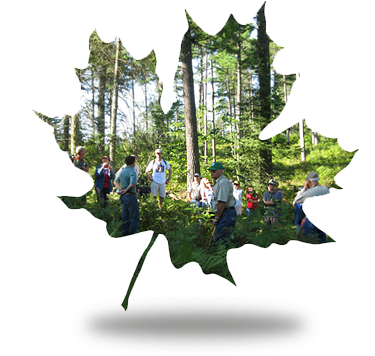
A total of 20 members of the Wisconsin Society of American Foresters and guests participated in a tour of the Badger Army Ammunition Plant site on August 27. DNR staff, including Carmen Wagner (vice chair of the Southwest chapter ), Jeff Barkley, John Grit, and Jim Kerkman (SAF state chair) and other SAF members gather at the plant site in Sauk County.
 

Paul E. Pingrey
Chapter Sec. - Treasurer

ph. 608-267-7595
e-mail paul.pingrey@wisconsin.gov


Home       Calendar       Chapters       Committees       About SAF